Can Myopia Be Slowed Down or Stopped? What Parents Need to Know About Today’s Treatment Options

Can Myopia Be Slowed Down or Stopped? What Parents Need to Know About Today’s Treatment Options

Can Myopia Be Slowed Down or Stopped? What Parents Need to Know About Today’s Treatment Options

Can Myopia Be Slowed Down or Stopped? What Parents Need to Know About Today’s Treatment Options

Can Myopia Be Slowed Down or Stopped? What Parents Need to Know About Today’s Treatment Options


Myopia, often called nearsightedness, is becoming more common in children. If your child squints to see the board at school, sits close to screens, or needs stronger glasses every year, you may be wondering whether myopia can be slowed down or stopped.
While myopia cannot be fully reversed, today’s myopia management options can help slow its progression. At Pilot Point Family Eye Care, we offer personalized myopia management plans to support clear vision now and help protect long-term eye health.
What Is Myopia?
Myopia happens when the eye grows too long from front to back, causing distant objects to look blurry while near vision remains clearer. Many children first develop myopia during the school years, and it can continue to progress as they grow.
Traditional glasses and contact lenses help your child see clearly, but they do not always address the underlying progression of myopia. Myopia management focuses on slowing that progression over time.
Why It’s Important to Slow Myopia Progression
When myopia progresses, your child may need stronger prescriptions year after year. Higher levels of myopia can also increase the risk of certain eye health problems later in life, including retinal issues, glaucoma, and other vision complications. The goal of myopia control is not just better vision today. It is also about reducing how quickly the eye changes as your child grows.
Today’s Myopia Management Options
Modern myopia management may include several different treatment approaches depending on your child’s age, prescription, and comfort level. These options are designed to help manage eye growth while keeping vision clear for school, sports, and everyday activities.
Myopia management may include:
• Orthokeratology (Ortho-K)
• MiSight 1 day lenses
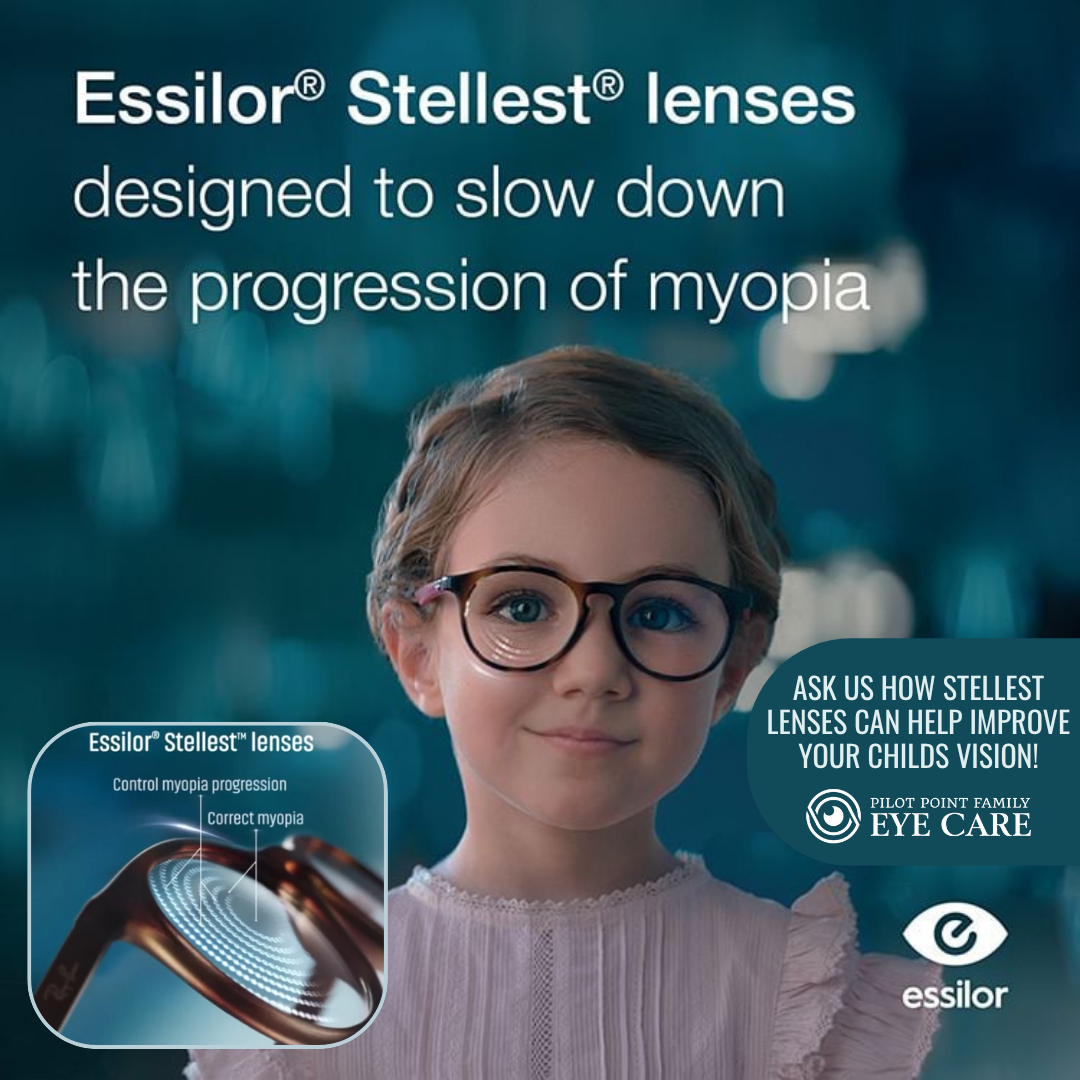
• Stellest lenses for children who prefer glasses
• Lifestyle guidance, including outdoor time and screen habits
• Ongoing monitoring to track prescription changes and eye growth
Regular follow-up visits help us evaluate how your child is responding and make adjustments when needed.
When Should Parents Consider Myopia Management?
Parents should consider myopia management when a child is diagnosed with nearsightedness, especially if the prescription is changing quickly. It may also be helpful if one or both parents are nearsighted, since family history can increase a child’s risk.
Signs your child may need an eye exam include blurry distance vision, headaches, eye strain, holding books or devices very close, or trouble seeing in the classroom.
Helping Your Child See Clearly and Protect Their Future Vision
Myopia management gives parents a proactive way to care for their child’s vision. Instead of only updating glasses each year, we can create a plan that focuses on slowing progression and supporting healthy visual development.
Schedule a pediatric eye exam at Pilot Point Family Eye Care to learn more about myopia management and which treatment is right for your child. Visit our office in Pilot Point, Texas, or call (940) 248-9868 to book an appointment today.

All Eye
Care Services

Keep
In Touch

Contact Info

Hours of Operation
- Monday 8:00 AM - 5:00 PM
- Tuesday 8:00 AM - 4:00 PM
- Wednesday 8:00 AM - 5:00 PM
- Thursday 8:00 AM - 4:00 PM
- Friday 8:00 AM - 1:00 PM
- Saturday Closed
- Sunday Closed
© 2026 Pilot Point Family Eye Care. All rights Reserved. Accessibility Statement - Privacy Policy - Sitemap
Powered by: