The Long-Term Effects of Myopia: Why Early Management Matters

The Long-Term Effects of Myopia: Why Early Management Matters

The Long-Term Effects of Myopia: Why Early Management Matters

The Long-Term Effects of Myopia: Why Early Management Matters

The Long-Term Effects of Myopia: Why Early Management Matters

Myopia (nearsightedness) is one of the most common vision conditions diagnosed in children and teens—and it’s becoming more common every year. Many families think of myopia as simply needing glasses, but when myopia continues to worsen over time, it can affect eye health well into adulthood. Understanding how myopia develops and why it matters long term helps explain why early detection and proactive management are so important.
What Is Myopia?
Myopia occurs when the eye grows too long from front to back or when the cornea is too curved. Instead of light focusing directly on the retina, it focuses in front of it. This makes distant objects appear blurry while close-up vision remains clear. Myopia often begins in childhood and may continue to worsen as a child grows. Genetics play a role, but lifestyle factors—such as increased screen time and less time spent outdoors—also contribute to progression.
Why Progressive and High Myopia Matter
While mild myopia can usually be corrected easily with glasses or contact lenses, higher levels of myopia are linked to an increased risk of serious eye conditions later in life. As myopia progresses, the eye continues to stretch, placing stress on delicate internal structures. This increases the risk of retinal detachment, a medical emergency that can lead to sudden vision loss. High myopia is also associated with myopic macular degeneration, which can permanently affect central vision. In addition, individuals with high myopia are more likely to develop glaucoma and cataracts at an earlier age.
Because these risks are tied to how much the eye grows during childhood, slowing myopia progression early can significantly reduce the chances of long-term complications.
The Importance of Early Detection
Children don’t always recognize or communicate that their vision is blurry. Regular eye exams allow myopia to be detected early and monitored over time. When changes are caught sooner, families have more options to help slow progression and protect long-term eye health.
Clear vision also plays an important role in school performance, sports, and daily activities. Addressing vision concerns early can help prevent eye strain, headaches, and unnecessary challenges in the classroom.
How Myopia Management Helps
Myopia management focuses on more than just improving eyesight—it’s designed to slow the progression of myopia and reduce future eye health risks. Several evidence-based options are available today.
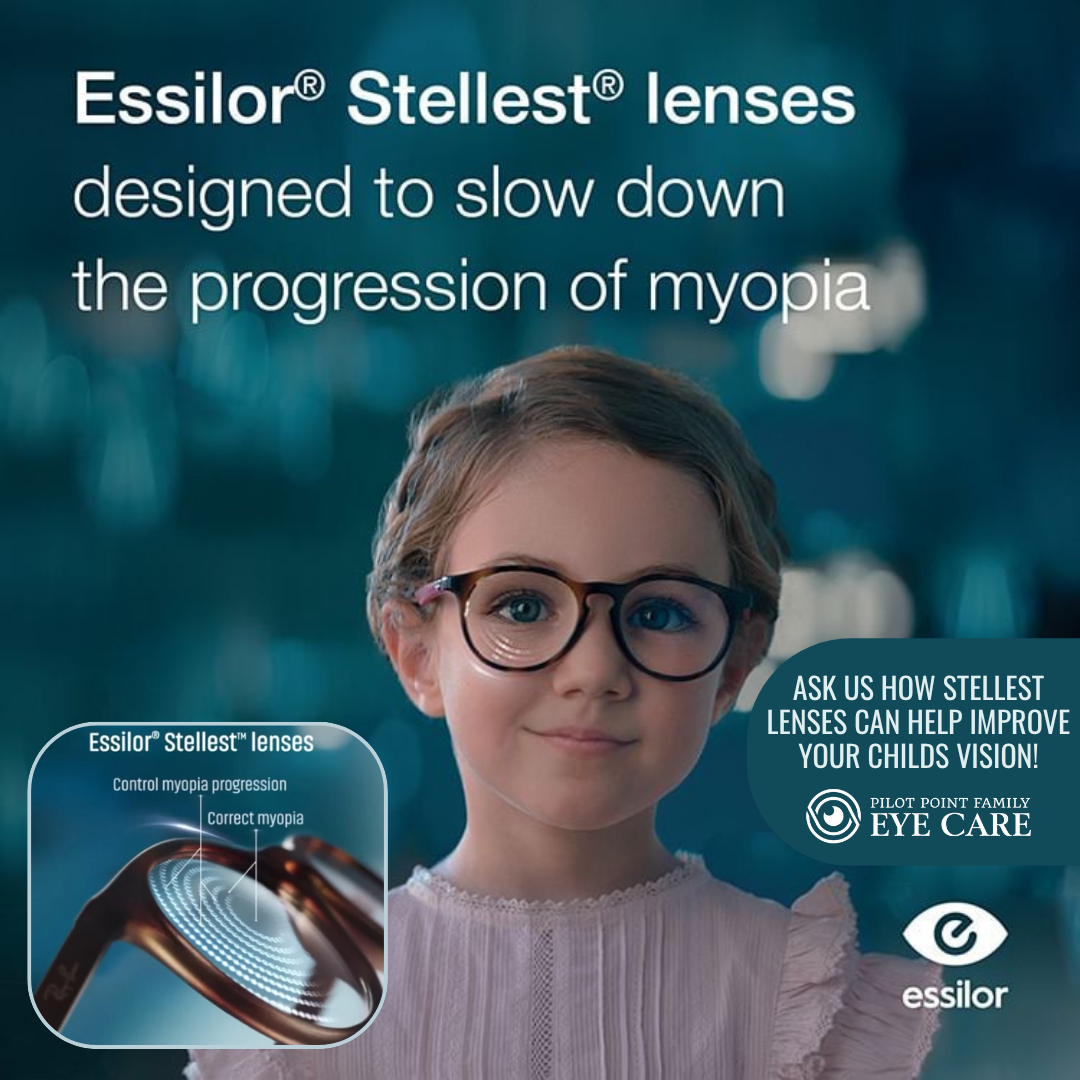
Specialty spectacle lenses, such as Essilor® Stellest™ lenses, look like regular glasses but use advanced optical technology to help manage eye growth while correcting vision.
Orthokeratology (Ortho-K) uses custom-designed rigid contact lenses worn overnight. These lenses gently reshape the cornea, allowing clear daytime vision without glasses or contacts while also helping slow myopia progression.
Soft multifocal contact lenses, including MiSight® 1 Day lenses by CooperVision, are FDA-approved specifically for myopia management in children. When worn consistently, these daily disposable lenses can significantly slow myopia progression while providing clear, comfortable vision.
Schedule a Myopia Evaluation at Pilot Point Family Eye Care
Myopia can change quickly during childhood, and when it progresses unchecked, it can increase the risk of serious eye conditions later in life. Early detection and consistent management are key to protecting long-term vision. At Pilot Point Family Eye Care, we offer comprehensive pediatric eye exams and customized myopia management options to support healthy vision as your child grows.
If your child has been diagnosed with myopia—or if you’re concerned about their vision—schedule an eye exam with our team. Visit our office in Pilot Point, Texas, or call (940) 248-9868 to book an appointment today.

All Eye
Care Services

Keep
In Touch

Contact Info

Hours of Operation
- Monday 8:00 AM - 5:00 PM
- Tuesday 8:00 AM - 4:00 PM
- Wednesday 8:00 AM - 5:00 PM
- Thursday 8:00 AM - 4:00 PM
- Friday 8:00 AM - 1:00 PM
- Saturday Closed
- Sunday Closed
© 2026 Pilot Point Family Eye Care. All rights Reserved. Accessibility Statement - Privacy Policy - Sitemap
Powered by: